
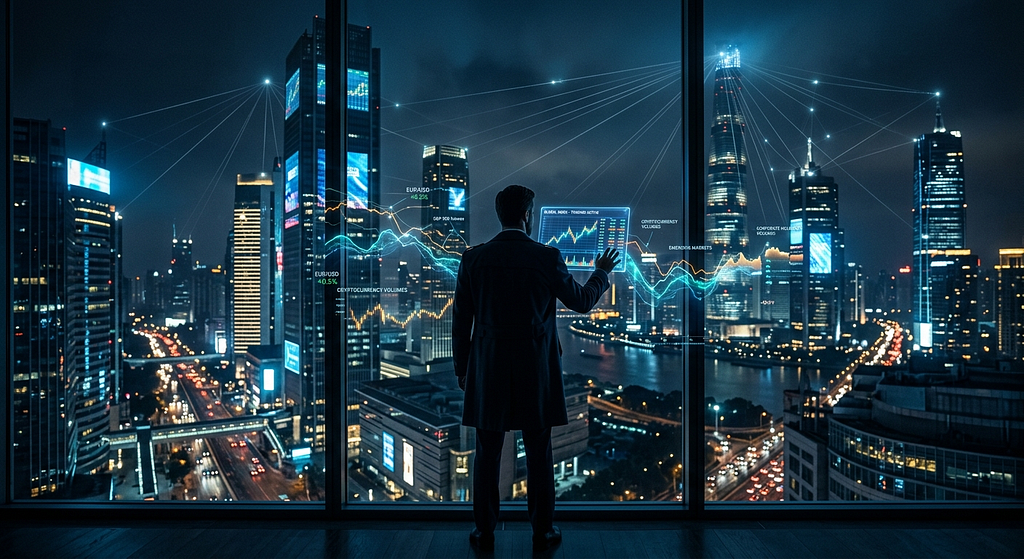
Most people look at giant companies and see:
But behind the polished image exists a much more complicated world.
A world built on:
The biggest companies in the world are not powered only by products.
They are powered by systems most people never fully notice.
Many people think:
“If a company sells shares, the owner loses control.”
Not exactly.
This is where corporate structure becomes fascinating.
When companies grow, they often sell shares to investors to raise money.
Why?
Because growth is expensive.
Building:
requires enormous capital.
So instead of paying everything personally, companies invite investors into the business.
This creates something powerful:
The company grows using other people’s money.
At first, it sounds strange.
How can giving away parts of a company make it stronger?
Because shares create fuel for expansion.
When investors buy shares:
A powerful company can use its market value almost like financial energy.
Sometimes perception itself becomes power.
If investors believe a company will dominate the future, money flows toward it rapidly.
And money creates more growth.
Now comes the question many people wonder about:
“If founders sell shares, how do they still remain the boss?”
The answer is strategy.
Many major companies use:
This means a founder may own a smaller percentage of the company financially…
while still controlling most voting power.
Some founders also become symbols of the company itself.
Investors trust the vision attached to that person.
So even when ownership spreads, influence remains concentrated.
Stock markets are not driven only by numbers.
They are driven by belief.
Fear and confidence move billions of dollars every day.
Sometimes companies become massively valuable not because of current profits —
but because investors believe they will dominate the future.
Markets reward:
This is why one announcement, one AI breakthrough, or one product launch can suddenly increase a company’s value by billions.
Modern finance is deeply psychological.
Most ultra-rich people do not keep their wealth as piles of cash.
Their wealth often exists in:
This changes everything.
Instead of selling shares and paying massive taxes immediately, many wealthy individuals:
This is one reason rich people often appear to grow wealth faster than ordinary workers.
The system rewards ownership differently than salary income.
Workers exchange:
time for money
Owners build:
systems that generate value continuously
This is one of the biggest economic differences in the modern world.
A company owner may earn while:
because the system continues operating.
Ownership scales differently than labor.
That is why major entrepreneurs focus heavily on:
Today’s largest corporations are more powerful than many countries were historically.
They influence:
Some corporations possess:
This creates a strange modern reality:
People think governments control the future.
But increasingly, technology corporations shape how humanity communicates, shops, works, and even thinks.
Many people spend their entire lives:
without ever understanding the systems behind them.
The wealthy often study:
While the average person studies only consumption.
That difference quietly compounds over decades.
One of the biggest public questions is:
“How do billionaires legally pay lower taxes sometimes?”
The answer is complexity.
Modern financial systems contain:
In many countries, wealth held in assets is treated differently from direct salary income.
This does not always mean laws are broken.
Often, the wealthy simply have access to elite financial planning that ordinary people never learn about.
Knowledge itself becomes financial power.
Coding is valuable.
Business is valuable.
AI is valuable.
But one skill quietly sits behind them all:
Understanding systems.
People who understand:
begin seeing the world differently.
They stop looking only at products.
And start seeing the machinery behind civilization itself.
Billion-dollar companies are not magical.
They are systems built on:
The modern world often rewards those who understand the game behind the surface.
And perhaps the biggest difference between ordinary people and powerful institutions is not intelligence alone —
but understanding how invisible systems truly operate.
Get the latest updates and blog posts delivered straight to your inbox.